
Other
Knowledge graph news: latest updates and industry insights
Following knowledge graph news reveals a clear pattern: enterprise intelligence increasingly depends on structured semantic frameworks to deliver trustworthy, verifiable results.
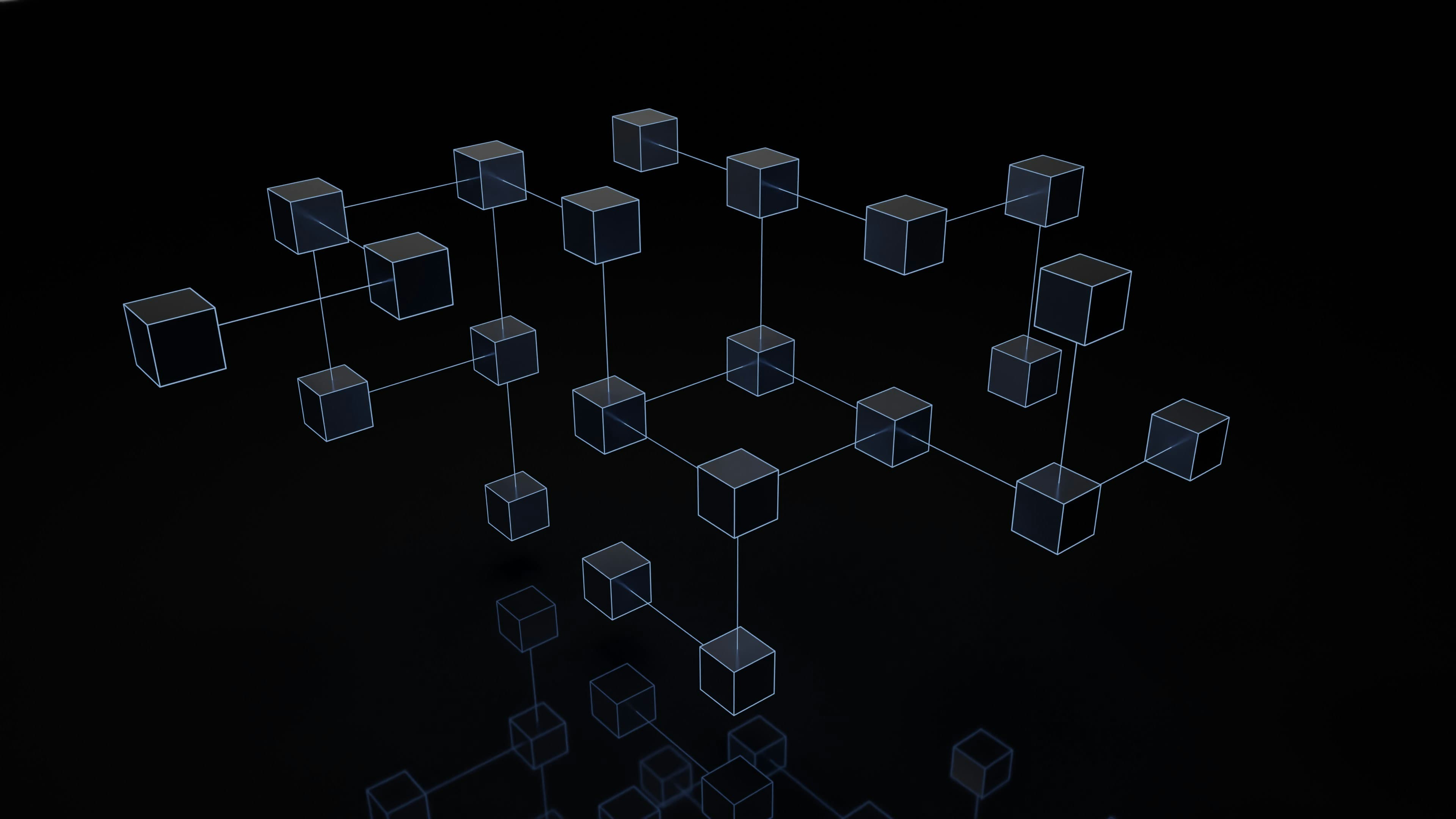
Introduction to knowledge graph news
The data world is shifting fast, and knowledge graph news has become required reading for tech leaders. Organizations are moving away from isolated silos toward semantic networks that deliver verifiable insights. The problem? Black-box machine learning models hallucinate, and traditional systems lose critical context along the way.
At Lettria Perseus, we built our text-to-graph AI system to bridge this gap. We transform unstructured documents into structured knowledge graphs with full traceability, mapping explicit relationships so every insight traces back to its source. Following knowledge graph news reveals a clear pattern: enterprise intelligence increasingly depends on these structured frameworks to deliver trustworthy results.
Key trends and advancements in knowledge graphs
Recent data modeling advancements are changing how enterprises structure and retrieve information, and the implications are significant.
The growing connection between AI and knowledge graphs
Integrating machine learning with semantic networks is redefining how query processing works. Traditional vector-based RAG systems lose critical context by retrieving information through statistical proximity, severing the explicit entity relationships that matter most. GraphRAG takes a different approach, preserving data relationships by mapping explicit connections between concepts.
When AI queries a knowledge graph, it traverses predefined relationships rather than guessing at statistical similarity. The result? Highly accurate outputs where hierarchical dependencies remain intact. This provides a robust foundation for enterprise AI that actually understands your content.
Real-world applications and industry adoption
Adoption across finance, healthcare, and legal tech is accelerating, and for good reason. In regulated environments, the margin for error is zero. Implementing enterprise knowledge graphs allows organizations to audit every data touchpoint and maintain strict governance over their information.
Our intelligent RAG approach enables teams to process compliance documents 60% faster with complete data lineage. When you structure text into verifiable networks, compliance risks drop because every claim can be traced back to its source document.
Overcoming traditional data models with knowledge graphs
Legacy databases and modern vector stores both create problems. The former force data into rigid schemas; the latter strip away semantic depth. Overcoming these limitations requires a fundamentally different approach to data modeling.
Unlike traditional vector databases that flatten information into isolated embeddings, Lettria Perseus maintains semantic relationships through automated ontology generation. We map exact industry taxonomies, so your graph database reflects your actual business logic rather than a statistical approximation.
| Feature | Traditional vector databases | Knowledge graphs (via Perseus) |
|---|---|---|
| Data representation | High-dimensional embeddings | Explicit semantic entities |
| Context preservation | Low (statistical proximity) | High (exact hierarchy) |
| Traceability | Opaque (black-box retrieval) | 100% verifiable data lineage |
| Query speed | Fast for simple searches | Up to 3x faster for complex reasoning |
The future of knowledge graph innovation
Automating graph construction represents a pivotal breakthrough in data science. Building a graph database historically required months of manual data modeling, a process that drained resources and delayed deployments.
The Lettria Perseus text-to-graph AI system changes this equation. We automatically generate entities, relations, and complex structures directly from unstructured text, outputting results into leading graph databases like Neo4j and FalkorDB. Manual ontology building bottlenecks disappear. Developers configure environments rapidly through our APIs and Python SDK.
The advantages are concrete:
-
Reducing deployment timelines by 70%
-
Allowing educators and media organizations to build linked data networks on open standards
-
Freeing teams to focus on database analytics instead of manual structuring
-
Creating robust agent memory for autonomous AI systems
Conclusion: staying ahead in knowledge graph development
Staying informed on knowledge graph news is essential for anyone building transparent AI systems. The shift toward interconnected semantic networks opens real opportunities for digital transformation, but only for leaders who adopt tools that prioritize data lineage and verifiability.
We designed Perseus to address exactly this challenge. Explore how automated ontology generation transforms unstructured data into actionable knowledge. Discover our graph building and graph retrieval capabilities built for production AI systems. Sign up for the Perseus platform today and see what traceable, trustworthy AI looks like in practice.
Frequently asked questions about knowledge graphs
What is a knowledge graph?
A knowledge graph is a structured data representation using nodes and edges to connect concepts. It maps information exactly as it exists, enabling machines to understand complex context accurately rather than approximating meaning through statistical patterns.
How do knowledge graphs benefit modern enterprises?
They break down data silos and provide a unified view of organizational knowledge. By preserving semantic relationships, knowledge graphs enable 3x faster complex query resolution. This structured approach delivers full traceability, which is critical for compliance requirements and deploying AI agents you can actually trust.
What are the latest developments in knowledge graph technology?
Recent advancements center on automated text-to-graph conversion and GraphRAG methodologies. Modern AI systems like Perseus automatically extract entities and build ontologies from unstructured text, reducing manual modeling time by 60% while minimizing the hallucinations that plague traditional RAG systems.
How can organizations stay updated on knowledge graph news?
Professionals track knowledge graph news by following tech publications, newsletters, and database providers. Engaging with developer communities, reviewing the Perseus leaderboard, and studying academic research on semantic web standards provides insights into emerging data modeling trends and practical implementation approaches.